Water

Is onsite water reuse right for my project?
Learn what drives water reuse feasibility for multifamily properties, from building size and location to reuse demand, regulations, and ROI.
Read More


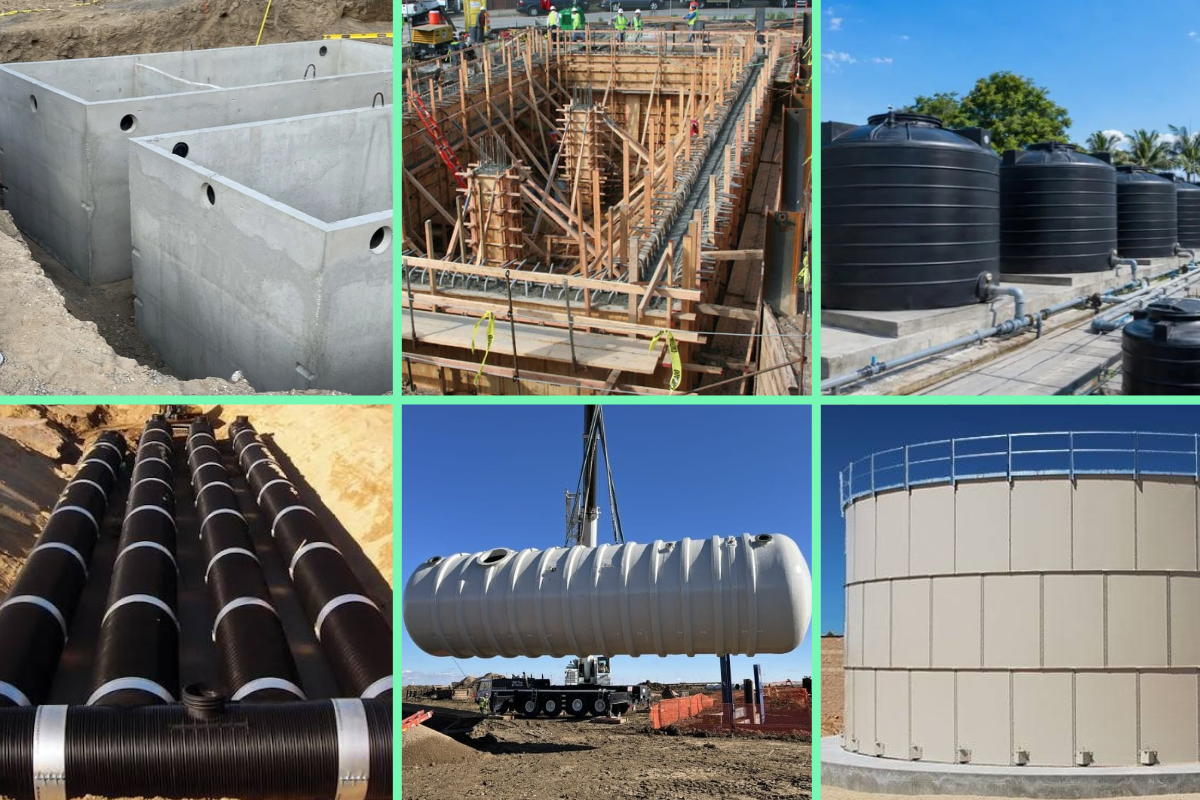
Every onsite water reuse system needs somewhere to hold water both before and after treatment. Whether you’re capturing blackwater, greywater, rainwater, or condensate, the storage tank (or cistern) is often the single largest piece of equipment on the project. It can also be the biggest line item.
That makes tank selection one of the most important early decisions on a project considering onsite water recycling. If you pick well, you protect your budget, your schedule, and your long-term operating costs. Without the right selection, you’ll end up redesigning around a tank that doesn’t fit the site, source water or end use application.
The good news is there’s no single “right” tank. There’s a right tank for your site, your volume, and your project’s goals. Here’s a look at some of the most common options and where each one shines.
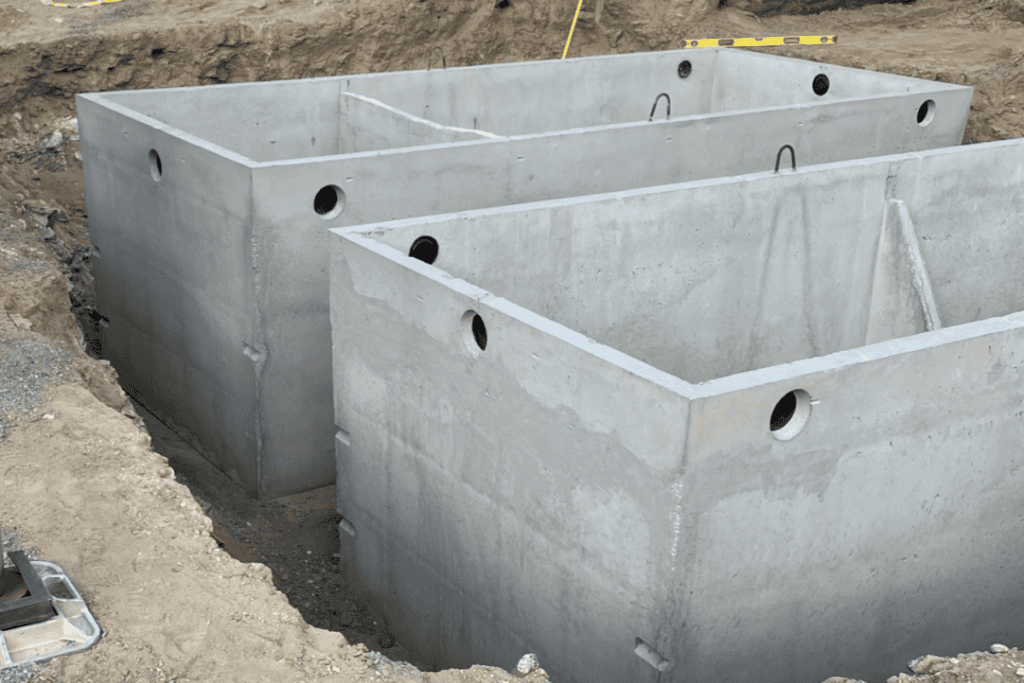
Precast concrete systems arrive as factory-made modules that are set in place and connected onsite, typically with a watertight liner.
Benefits
Best for: Buried installations on cost-sensitive projects with room for a modular footprint.
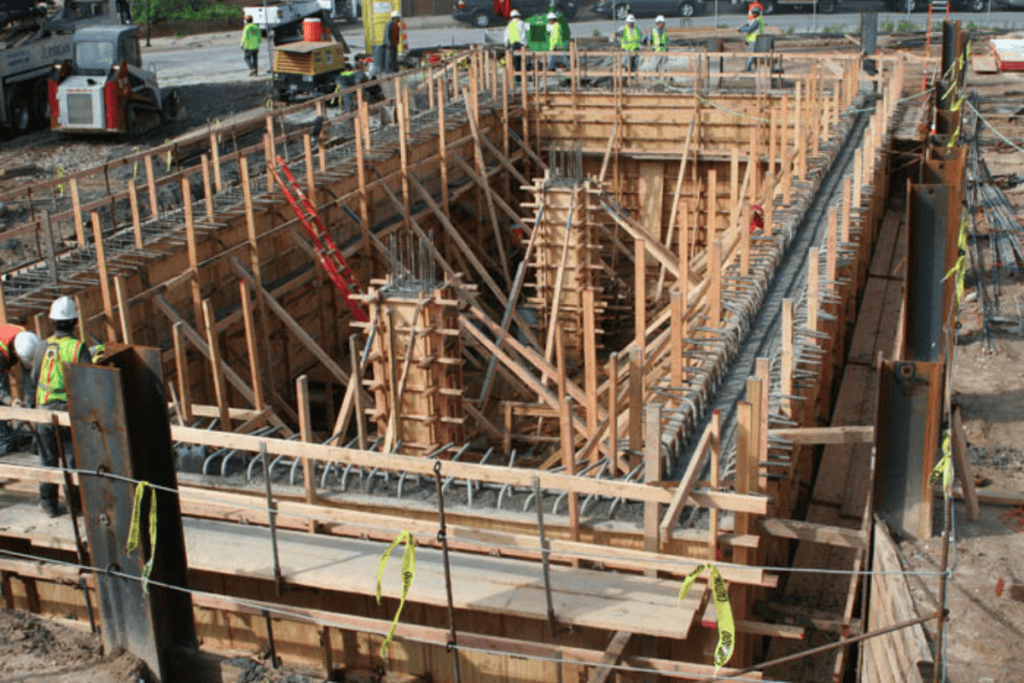
Cast-in-place tanks are built onsite, either as a freestanding structure or built right into the building’s foundation or parking structure.
Benefits
Tradeoffs: Requires a liner or coating, needs careful planning for penetrations, and can be sensitive to acidic soils. Construction is logistics-heavy and timelines may run longer. Costs are also more variable than other options and can run higher when the tank carries building loads versus sitting freestanding in a yard.
Best for: Projects where the tank needs to integrate with the building structure or fit an unusual footprint.
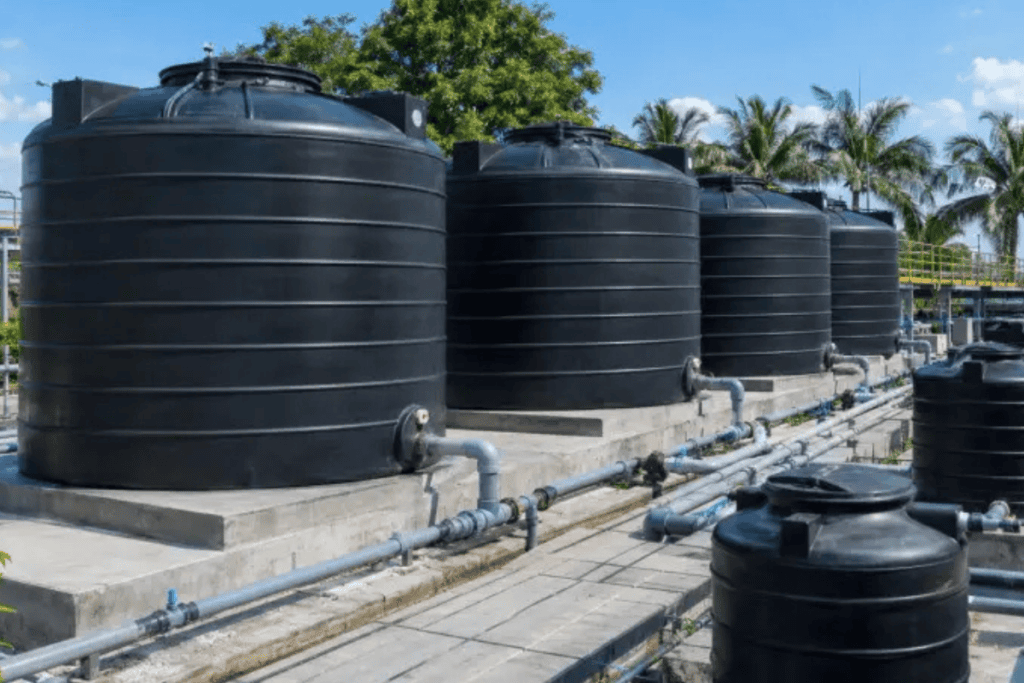
Plastic tanks come in two main styles: vertical circular tanks for smaller volumes and modular systems that link together for larger storage.
Benefits
Tradeoffs: Shorter lifespan of roughly 10 to 20 years, and the tanks can’t be repaired if damaged. Vertical tanks top out under about 10,000 gallons, and modular systems generally need a field-installed liner. Large units are hard to ship, buried tanks face high buoyancy risk and seismic bracing can get expensive.
Best for: Smaller rainwater or condensate systems, especially above ground, where keeping capital cost low is the priority.
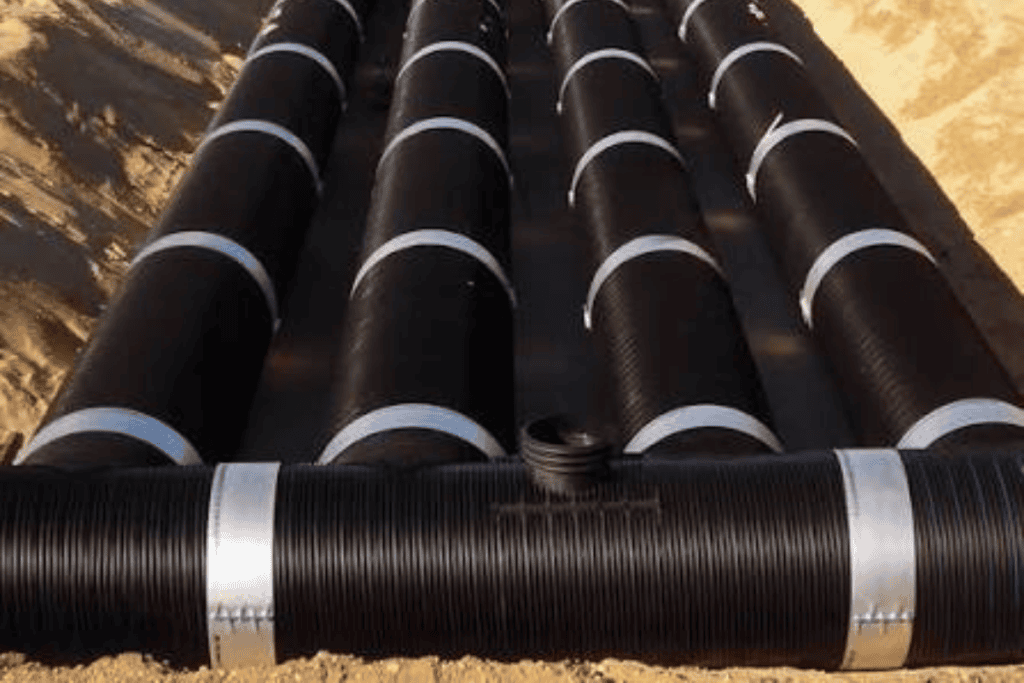
Steel-reinforced polyethylene combines a plastic interior with steel reinforcement, sealed into a watertight pipe-style tank.
Benefits
Tradeoffs: Designed for buried installation only. Buoyancy needs to be addressed in high groundwater, and repair options are limited. Upfront cost sits in the middle of the pack.
Best for: Buried systems where long life and simple installation matter, and the project can absorb a moderate upfront cost.
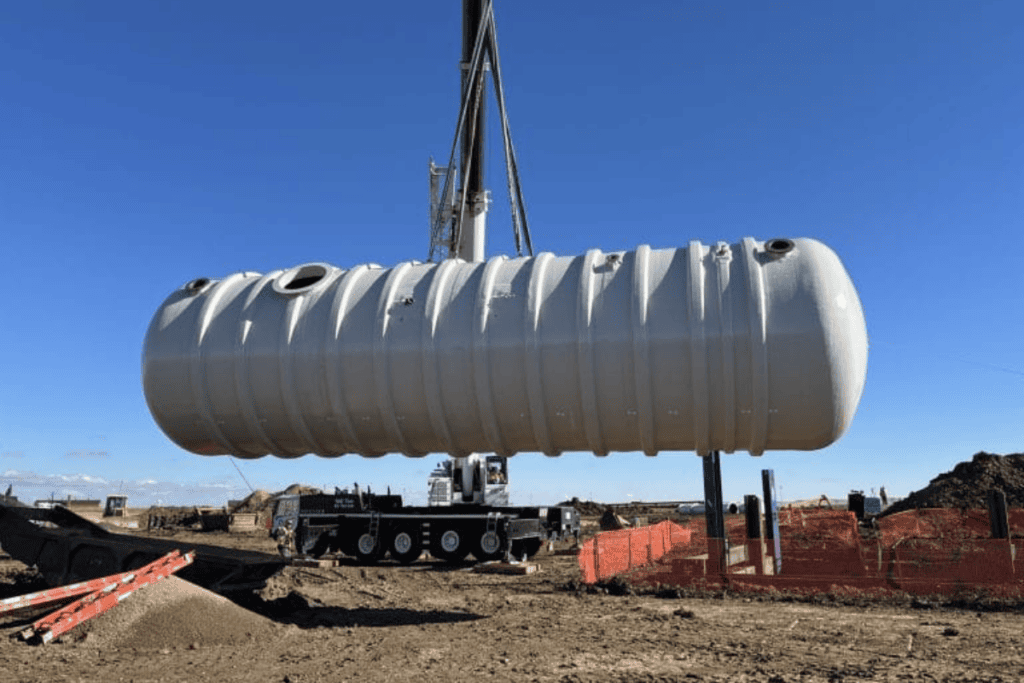
Fiberglass-reinforced plastic tanks are factory-built and come in a wide range of custom shapes and sizes.
Benefits
Tradeoffs: Penetrations need to be planned upfront, since field modifications are difficult. Lead times tend to be longer, large units are hard to ship, buried tanks need buoyancy protection and seismic bracing must be designed early. Upfront cost is on the higher end.
Best for: Projects that need a custom shape or access configuration and have a well-defined design early on.
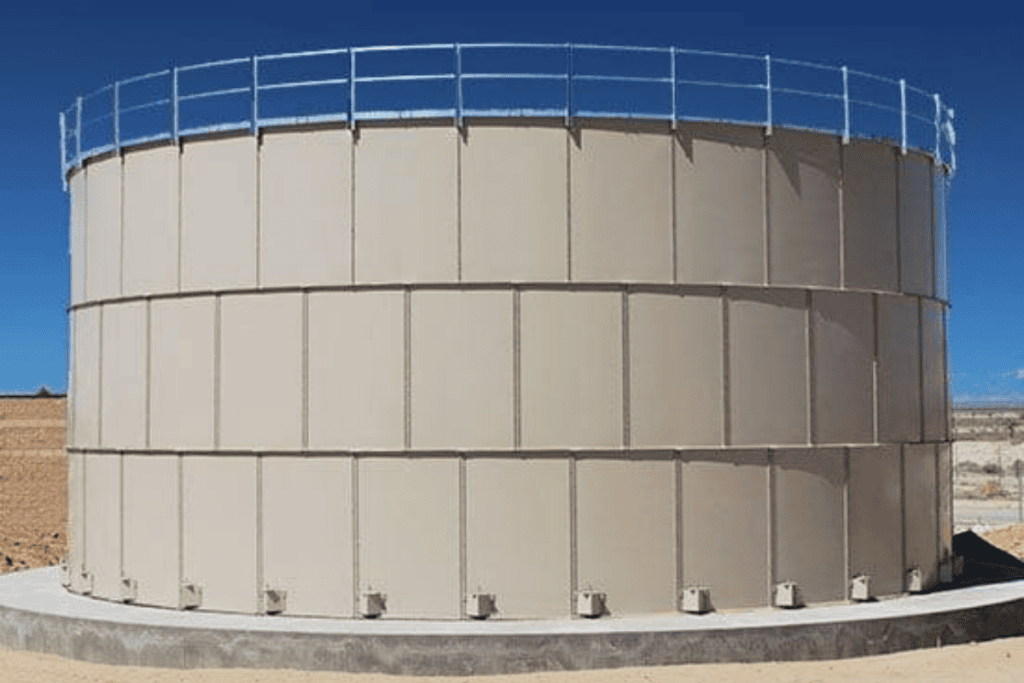
Bolted steel tanks are assembled onsite from panels. Welded steel is also an option.
Benefits
Tradeoffs: Steel typically needs a liner or coating to resist corrosion and requires periodic corrosion checks. It has an industrial look, so placement matters if the tank is visible. Steel is also size-driven on cost: it tends to be less economical at smaller volumes and becomes much more competitive as storage needs grow.
Best for: Larger above-ground systems, or projects that expect to modify or expand the tank over time.
A note on open-top steel tanks with liners: we generally steer away from them for reuse storage, since odor and vector control are much harder to manage without a closed top.
| Feature | Cast-in-place concrete | Plastic (PE/HDPE) | Reinforced HDPE (SRPE) | Fiberglass (FRP) | Bolted steel |
|---|---|---|---|---|---|
| Upfront cost | Higher | Lower | Moderate | Higher | Higher (more competitive at large volumes) |
| Typical lifespan | 40 to 50 years | 10 to 20 years | 50+ years | 30 to 40 years | 40+ years |
| Installation | Above, buried or partial | Above or partial | Buried | Above or buried | Above or partial |
| Flexible form factor | Yes | No | No | Yes | Yes |
| Corrosion resistance | Moderate | High | High | High | Moderate |
| Field modifications | Low | Limited | Moderate | Low | High |
| Shipping & install ease | Moderate | Low | High | Moderate | High |
| Buoyancy resistance | High | Low | Low | Low | Moderate |
| Repairability | High | Low | Low | Moderate | High |
| Liner required | Yes | No | No | No | Yes |
Precast concrete modular systems are a separate, lower-cost product from cast-in-place concrete and typically include a liner.
1. Let the project site narrow the field first
Before cost even enters the conversation, site conditions rule options in or out. Does the tank need to be buried or above ground? How much footprint and height do you have? Is groundwater high? Are soils corrosive? Answering these questions often cuts the list in half.
2. Lead with the lowest-cost options that fit
The cistern’s capital cost is often the biggest barrier to onsite reuse. Among the tank types that work for your site, precast concrete and plastic can keep upfront costs lowest, as long as they work for your goals.
3. Think about the full life of the system
A lower upfront cost isn’t always the better long-term value. A tank that lasts 50 years, resists corrosion or can be repaired in place may pay off over a building’s lifetime, even if it costs more on day one.
4. Size matters for the budget, too
Per-gallon costs generally drop as storage volume grows and climb at smaller volumes. Steel in particular becomes much more competitive at larger sizes. Freight, installation and liner scope also shift from site to site, so get project-specific quotes for your volume.
The right tank depends on your site, your storage volume and how you weigh upfront cost against long-term performance. Start with site constraints, look first at the most cost-effective options that fit, then weigh lifespan, maintenance and flexibility.
Not sure where to start? Epic Cleantec helps developers and design teams evaluate storage options as part of every OneWater™ system and project feasibility assessment, so your cistern fits your site, your budget and your water reuse goals. Talk to our team about your next project.
Learn what drives water reuse feasibility for multifamily properties, from building size and location to reuse demand, regulations, and ROI.

Water and sewer rates are climbing, quietly eroding property value. Here’s why more developers are turning to water reuse.
Learn how water reuse can help support digital infrastructure while protecting the communities and watersheds where data centers are built.