
The OneWater TM Rain system
Simplifying water reuse with rainwater and condensate recycling solutions
Download Specs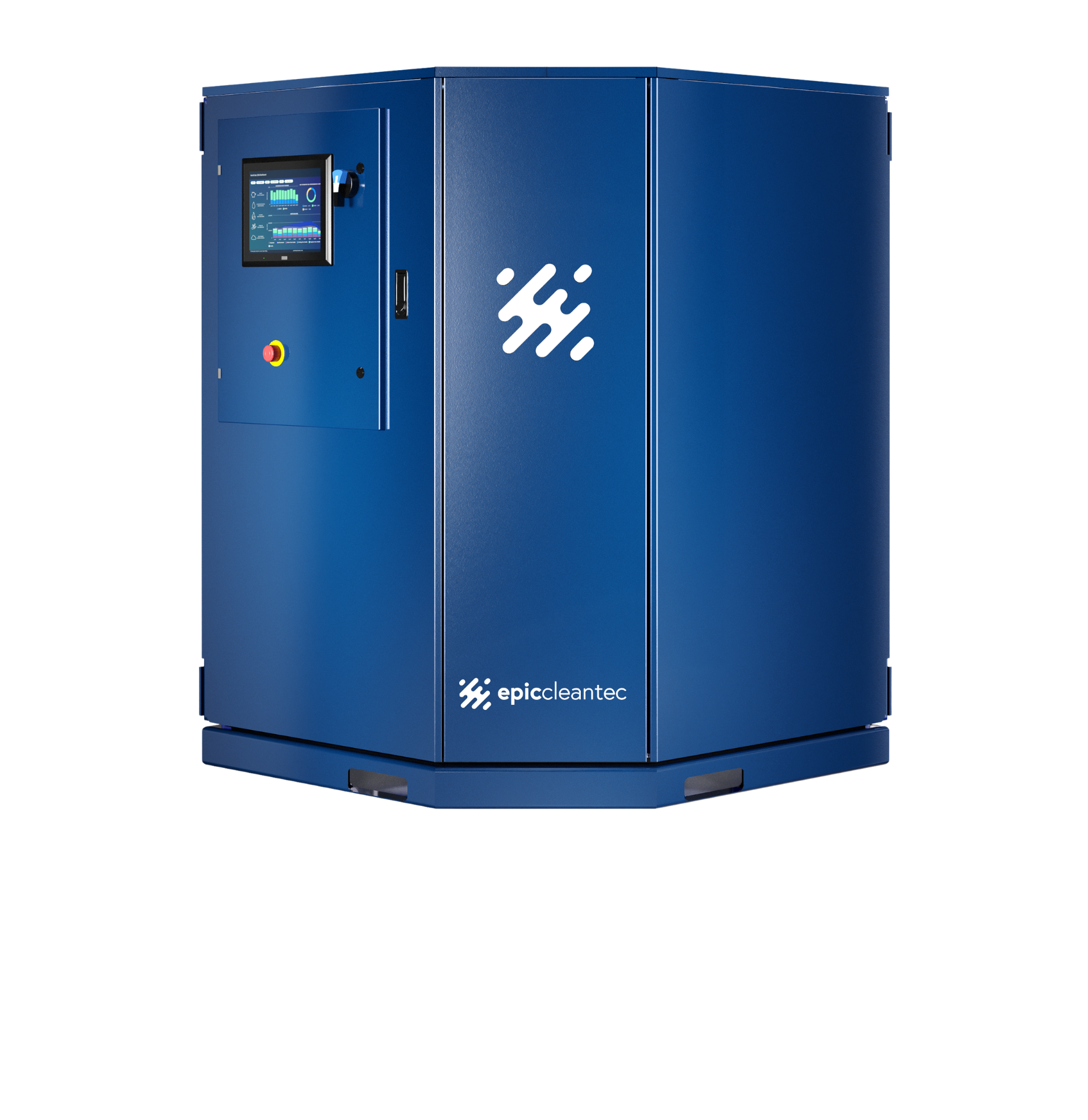

Consolidated rainwater recycling solutions for real estate projects
Epic Cleantec’s OneWaterTM Rain system captures, treats, and reuses rainwater and AC condensate to create high-quality non-potable water supply for real estate projects. Our process combines advanced filtration and disinfection into a single platform, ensuring consistent water quality. Our goal is to help your project reduce its dependence on municipal supply, and to provide a renewable source of water that aligns with both regulatory compliance and sustainability goals.
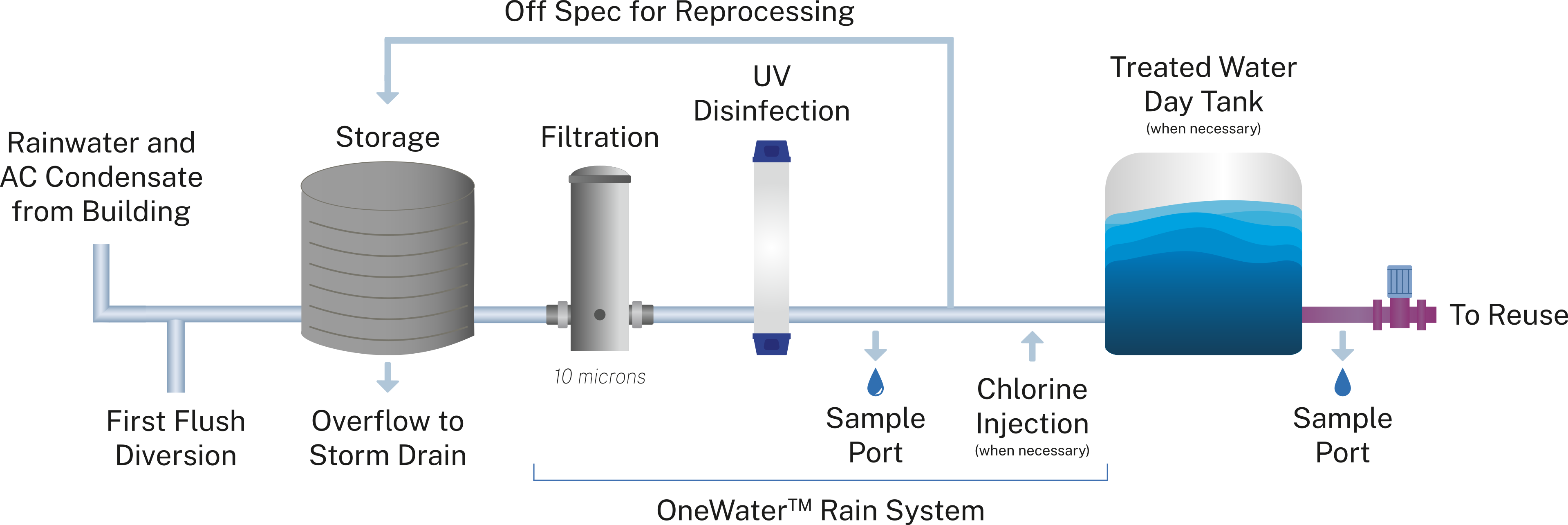
TREATMENT PROCESS
- Collection & First Flush
- Storage
- Filtration
- Disinfection
Rooftop rainwater and AC condensate is collected. The first flush diverter directs the initial roof runoff (which contains higher pollutant loads such as dust, animal droppings, or rooftop debris) to the storm drain.
Collected water is stored in a cistern and any excess water is discharged. The cistern serves as the primary buffer, allowing solids to settle and providing a reserve volume for treatment.
Filtration removes fine sediments and particulates. This protects downstream equipment from fouling and ensures the water meets turbidity limits for pathogen crediting.
Ultraviolet (UV) reactors deliver a validated dose (>40 mJ/cm² per EPA UVDGM or NSF 55 Class A), inactivating pathogens like bacteria, protozoa, and viruses. For some applications, chlorine is used as a secondary disinfection method. A sample port allows operators to collect water for testing.
OneWaterTM Rain system: Model details
| Model | OWR-20 | OWR-40 | OWR-60 | OWR-80 |
|---|---|---|---|---|
| Source Water | Rainwater & Condensate | Rainwater & Condensate | Rainwater & Condensate | Rainwater & Condensate |
| Maximum GPM Processed (a,b) | 20 | 40 | 60 | 80 |
| a Flow rates listed assume UV Dosage at 40 mJ/cm2, alternate dosage value available upon request and to meet regulatory requirements b UV units are NSF/ANSI-55 listed |
||||
| Main Skid Dimensions (LxWxH in) | 63" x 30" x 60" | 63" x 30" x 60" | 63" x 30" x 60" | 77" x 30" x 60" |
| Accessory Quantities & Dimensions | ||||
| Cartridge Filter | INCL, on-skid | INCL, on-skid | 22.5” Ø x 30” H | 22.5” Ø x 30” H |
| Sand Filter (project dependent) | 21” x 62” | 24” x 62” | 24” x 62” | 36” x 72” |
| Blower (project dependent) | 1.5 hp - 18” x 21” | 2 hp - 18” x 21” | 3 hp - 21” x 24” | 5 hp - 21” x 24” |
| Cistern Transfer Pump (project dependent) | Sized to meet project needs, typically submersible | |||
| Cistern | Sized to meet project needs | |||
| Day Tank (project dependent) | Sized to meet project needs, allows for supply to various reuse demands with customized water quality | |||
| Electrical | ||||
| Main Control Panel, 120V, 1ph (alternate voltages available) |
25A | 27A | 30A | 32A |
| Plumbing Connections at Main Skid: Projects without Sand Filter | ||||
| Pump Discharge to Cartridge Filter (CF on Skid) | 1.5” PVC80 | 2” PVC80 | 2” PVC80 | 2” PVC80 |
| From Cartridge Filter to UVs (CF off-Skid) | 1.5” PVC80 | 2” PVC80 | 2” PVC80 | 2” PVC80 |
| Off Spec Water Diversion | 1.5” PVC80 | 2” PVC80 | 2” PVC80 | 2” PVC80 |
| Manual Skid Drain | 1.5” PVC80 | 2” PVC80 | 2” PVC80 | 2” PVC80 |
| Treated Water to NP Storage Tank | 1.5” PVC80 | 2” PVC80 | 2” PVC80 | 2” PVC80 |
| Plumbing Connections at Main Skid: Projects with Sand Filter | ||||
| Pump Discharge to Cartridge Filter (CF on Skid) | 1.5” PVC80 | 2” PVC80 | 2” PVC80 | 2” PVC80 |
| From Cartridge Filter to UVs (CF off-Skid) | 1.5” PVC80 | 2” PVC80 | 2” PVC80 | 2” PVC80 |
| Sand Filter to UVs | 1.5” PVC80 | 2” PVC80 | 2” PVC80 | 2” PVC80 |
| Off Spec Water Diversion | 1.5” PVC80 | 2” PVC80 | 2” PVC80 | 2” PVC80 |
| Manual Skid Drain | 1.5” PVC80 | 2” PVC80 | 2” PVC80 | 2” PVC80 |
| Treated Water to NP Storage Tank | 1.5” PVC80 | 2” PVC80 | 2” PVC80 | 2” PVC80 |
| Backwash from NP Storage Tank | 1.5” PVC80 | 2” PVC80 | 2” PVC80 | 2” PVC80 |
- Source Water Rainwater & Condensate
- Maximum GPM Processed 20
-
a Flow rates listed assume UV Dosage at 40 mJ/cm2, alternate dosage value available upon request and to meet regulatory requirements
b UV units are NSF/ANSI-55 listed - Main Skid Dimensions (LxWxH in) 63" x 30" x 60"
- Cartridge Filter INCL, on-skid
- Sand Filter (project dependent) 21” x 62”
- Blower (project dependent) 1.5 hp - 18” x 21”
- Cistern Transfer Pump (project dependent) Sized to meet project needs, typically submersible
- Cistern Sized to meet project needs
- Day Tank (project dependent) Sized to meet project needs, allows for supply to various reuse demands with customized water quality
-
Main Control Panel, 120V, 1ph
(alternate voltages available) 25A
- Pump Discharge to Cartridge Filter, From Cartridge Filter to UVs, Off Spec Water Diversion, Manual Skid Drain, Treated Water to Storage Tank 1.5” PVC80
- Pump Discharge to Cartridge Filter, From Cartridge Filter to UVs, Sand Filter to UVs, Off Spec Water Diversion, Manual Skid Drain, Treated Water to Storage Tank, Backwash from Storage Tank 1.5” PVC80
- Source Water Rainwater & Condensate
- Maximum GPM Processed 40
-
a Flow rates listed assume UV Dosage at 40 mJ/cm2, alternate dosage value available upon request and to meet regulatory requirements
b UV units are NSF/ANSI-55 listed - Main Skid Dimensions (LxWxH in) 63" x 30" x 60"
- Cartridge Filter INCL, on-skid
- Sand Filter (project dependent) 24” x 62”
- Blower (project dependent) 2 hp - 18” x 21”
- Cistern Transfer Pump (project dependent) Sized to meet project needs, typically submersible
- Cistern Sized to meet project needs
- Day Tank (project dependent) Sized to meet project needs, allows for supply to various end uses with customized water quality
-
Main Control Panel, 120V, 1ph
(alternate voltages available) 27A
- Pump Discharge to Cartridge Filter, From Cartridge Filter to UVs, Off Spec Water Diversion, Manual Skid Drain, Treated Water to Storage Tank 2” PVC80
- Pump Discharge to Cartridge Filter, From Cartridge Filter to UVs, Sand Filter to UVs, Off Spec Water Diversion, Manual Skid Drain, Treated Water to Storage Tank, Backwash from Storage Tank 2” PVC80
- Source Water Rainwater & Condensate
- Maximum GPM Processed 60
-
a Flow rates listed assume UV Dosage at 40 mJ/cm2, alternate dosage value available upon request and to meet regulatory requirements
b UV units are NSF/ANSI-55 listed - Main Skid Dimensions (LxWxH in) 63" x 30" x 60"
- Cartridge Filter 22.5” Ø x 30” H
- Sand Filter (project dependent) 24” x 62”
- Blower (project dependent) 3 hp - 21” x 24”
- Cistern Transfer Pump (project dependent) Sized to meet project needs, typically submersible
- Cistern Sized to meet project needs
- Day Tank (project dependent) Sized to meet project needs, allows for supply to various end uses with customized water quality
- Main Control Panel, 120V, 1ph (alternate voltages available) 30A
- Pump Discharge to Cartridge Filter, From Cartridge Filter to UVs, Off Spec Water Diversion, Manual Skid Drain, Treated Water to Storage Tank 2” PVC80
- Pump Discharge to Cartridge Filter, From Cartridge Filter to UVs, Sand Filter to UVs, Off Spec Water Diversion, Manual Skid Drain, Treated Water to Storage Tank, Backwash from Storage Tank 2” PVC80
- Source Water Rainwater & Condensate
- Maximum GPM Processed 80
-
a Flow rates listed assume UV Dosage at 40 mJ/cm2, alternate dosage value available upon request and to meet regulatory requirements
b UV units are NSF/ANSI-55 listed - Main Skid Dimensions (LxWxH in) Main Skid Dimensions (LxWxH in)
- Cartridge Filter 22.5” Ø x 30” H
- Sand Filter (project dependent) 36” x 72”
- Blower (project dependent) 5 hp - 21” x 24”
- Cistern Transfer Pump (project dependent) Sized to meet project needs, typically submersible
- Cistern Sized to meet project needs
- Day Tank (project dependent) Sized to meet project needs, allows for supply to various reuse demands with customized water quality
- Main Control Panel, 120V, 1ph (alternate voltages available) 32A
- Pump Discharge to Cartridge Filter, From Cartridge Filter to UVs, Off Spec Water Diversion, Manual Skid Drain, Treated Water to Storage Tank 2” PVC80
- Pump Discharge to Cartridge Filter, From Cartridge Filter to UVs, Sand Filter to UVs, Off Spec Water Diversion, Manual Skid Drain, Treated Water to Storage Tank, Backwash from Storage Tank 2” PVC80
Download
To download the complete spec sheet and Revit files, please submit your information. If you’d like to connect with our team further, you can reach us at sales@epiccleantec.com.
Frequently asked questions
The Epic Cleantec OneWaterTM Rain system can collect and treat rainwater and AC condensate for reuse onsite. The system is best suited for commercial, industrial, multifamily residential, and mixed-use developments.
Treated water is supplied to approved non-potable end uses, like toilet flushing, irrigation, cooling tower makeup, and clothes washing. A growing number of states also allow treated rainwater to be used for drinking purposes. Learn more about the different types of wastewater.
All models of the OneWaterTM Rain system have an ethernet connection with the option to include cellular data, and utilize a PLC & HMI controller. BMS (building management system) and SCADA are also optional add-ons. Remote monitoring, control, and data logging are included in every model.
Tank working volumes, instrumentation, water quality unit processes, plant pumping, and purified water control strategy.
Loose ship components for field mounting, skid can be located indoors or outdoors.
Items that are not included as standard in equipment packages:
- Installation
- Interconnecting piping & wiring
- Reuse pump(s)
- Rainwater Diversion (OPTIONAL)
- Potable water makeup w/air gap (OPTIONAL)
- Potable Water Makeup Flowmeter (OPTIONAL)
- Municipal Bypass Actuated Valve (OPTIONAL)
- Tank design & supply (OPTIONAL)
- Safety shower (OPTIONAL)
- Utility sink (OPTIONAL)
- Building & room features (structure, doors, lighting, hose bibbs, convenience outlets, etc.)
- Chemical Storage
The following should be considered for integration:
- Upstream diversion provides maximum O&M flexibility
- Sufficient storage for rainwater capture
- Appropriate waterproofing of storage tanks/cisterns is required
- A local operator/lab sink and work table is recommended to keep O&M costs down
- High speed internet
- Room drainage capacity
- Day tank(s) if serving multiple reuse types to provide flexibility for variable onsite water quality and pumping requirements
Typical compliance targets include:
- Pathogen reduction validated by UV dose and chlorine residual (where required).
- Water clarity limits within validated UVT (UV transmittance) range.
- Total coliform bacteria: 7-sample median < 2.2 MPN/100 mL, 30-day maximum 23 MPN/100 mL, and absolute maximum 240 MPN/100 mL
The OneWater RainTM system is only designed to treat rainwater and condensate. Reach out to our sales team to learn more about our stormwater recycling solutions.
Ready to take the next steps with onsite water reuse?
Get a free water reuse assessment for your upcoming commercial real estate project
When you request a free project assessment, you'll receive all the information needed to make an informed decision on which system type is best for your budget and operational goals.
-
 ROM system costs
-
Water balance
-
Equipment list
-
ROI potential
-
Utility and net savings
-
Key takeaways