
The OneWater tm system
Scalable technology for onsite water reuse in your next project
Download Specs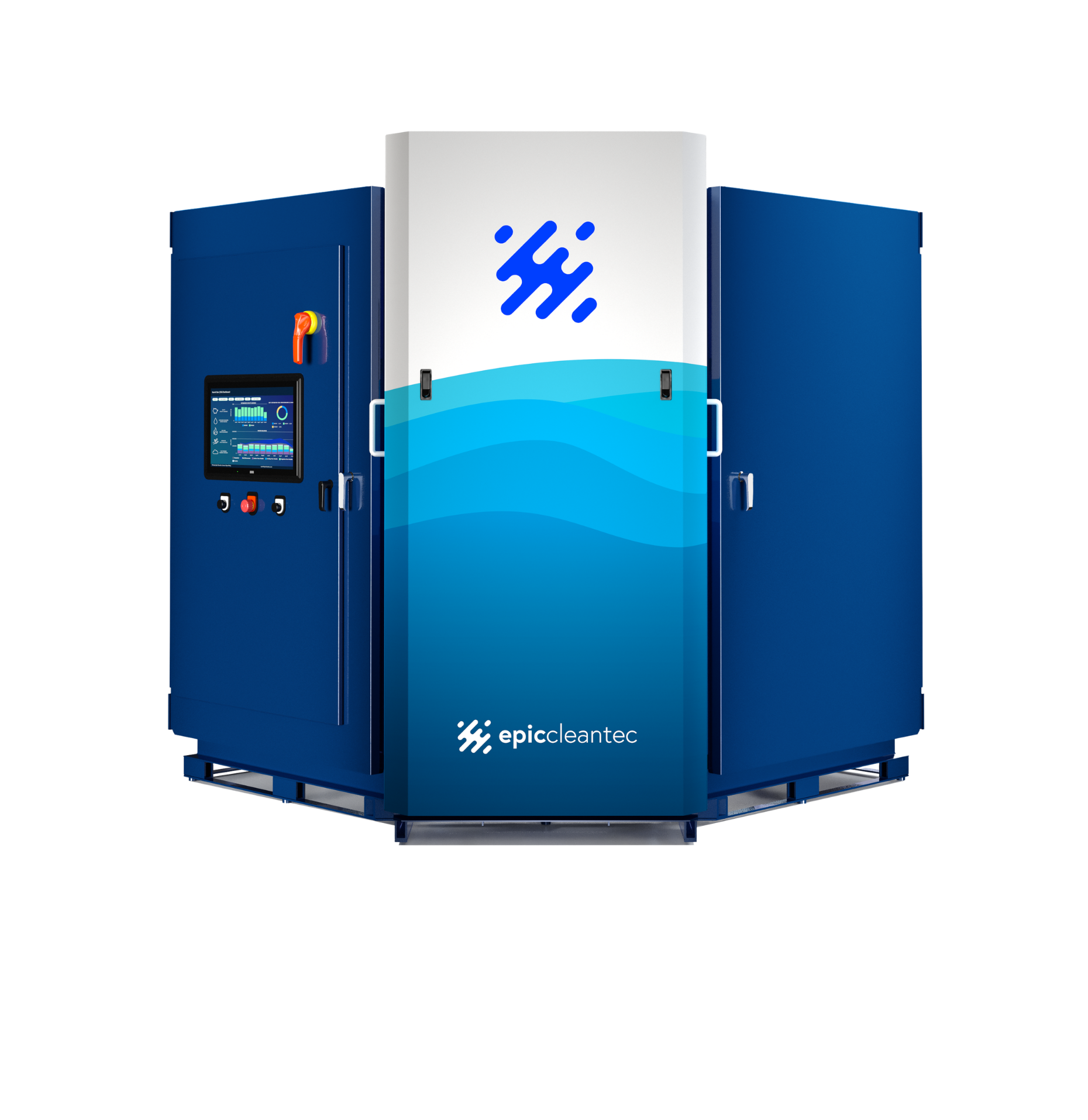

Customized water recycling solutions for commercial real estate projects
Epic Cleantec’s OneWaterTM system consolidates the collection, treatment, and reuse of wastewater (greywater) into a single, integrated process. This consolidated approach eliminates the need for separate treatment trains, reduces equipment footprint, simplifies operations & maintenance requirements, and maximizes opportunities for water and resource recovery.
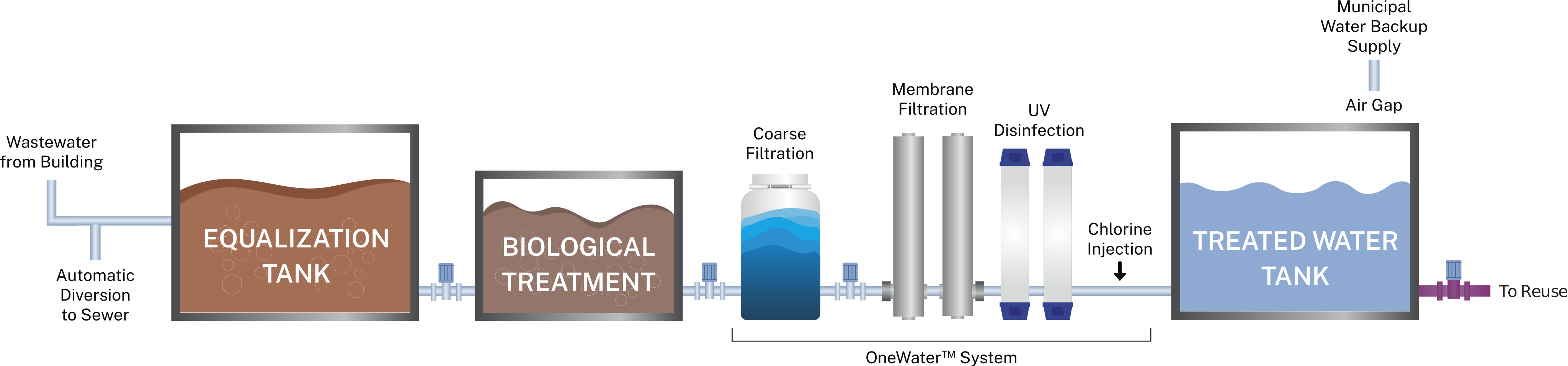
TREATMENT PROCESS
- Prefiltration
- Biological treatment
- Membrane filtration
- Disinfection
Coarse screening and grit removal, followed by equalization and primary settling to manage solids loading and flow fluctuations.
Membrane bioreactor (MBR) to achieve BOD, COD, and nutrient reduction. Learn more about our MBR technology.
Ultrafiltration (UF) membranes provide removal of bacteria, protozoa, and viruses.
Redundant UV disinfection with chlorine injection dosing to ensure compliance within distribution piping and storage.
OneWaterTM system: Model details
| Model | OW-15 | OW-30 | OW-45 | OW-60 |
|---|---|---|---|---|
| Source Water | Greywater | Greywater | Greywater | Greywater |
| Maximum Gallons per Day (GPD) Processed | 15,000 | 30,000 | 45,000 | 60,000 |
| Gallons per Minute (GPM) Treatment Rate | 10 | 21 | 31 | 42 |
| Main Skid Dimensions (LxWxH in) | 100" x 66" x 90" | 100" x 66" x 90" | 100" x 80" x 90" | 100" x 80" x 90" |
| Clean-in-Place (CIP) Skid Dimensions (LxWxH) | 68" x 29" x 75" | |||
| Accessory Quantities & Dimensions | ||||
| Bead Filter (Quantity, D x H) | 48" x 87" | 48" x 87" | 85" x 87" | 85" x 87" |
| Membrane Scour Air Supply Blower | 2 hp | |||
| Membrane Scour Air Receiver (D x H, in) | 17" x 51" | 17" x 51" | 22" x 54" | 22" x 54" |
| Aeration Tank Air Supply Blower (cfm) | 30 | 60 | 90 | 120 |
| Chemical Spill Pallet (on CIP skid) | Included | |||
| Electrical | ||||
| Main Control Panel (480V, 3-ph) | 33 FLA | 33 FLA | 40 FLA | 50 FLA |
| Plumbing Connections at Main Skid | ||||
| Equalization Tank Pump Suction | 4" PVC80 | |||
| CIP Recycle, Manual Skid Drain, Reject Drain, Aerobic Tank Pump Suction, Filtrate to Membranes, CIP to Membranes, CIP Recycle, Pump Discharge to Aerobic Tank, Off Spec Water Diversion, Reject to Aeration Tank, Pump Discharge to Filtration, Treated Water to NP Storage Tank | 2" PVC80 | |||
- Source Water Greywater
- Maximum Gallons per Day (GPD) Processed 15,000
- Gallons per Minute (GPM) Treatment Rate 10
- Main Skid Dimensions (LxWxH in) 100" x 66" x 90"
- Clean-in-Place (CIP) Skid Dimensions (LxWxH) 68" x 29" x 75"
- Bead Filter (Quantity, DxH) 48" x 87"
- Membrane Scour Air Supply Blower 2hp
- Membrane Scour Air Receiver (DxH, in) 17" x 51"
- Aeration Tank Air Supply Blower (cfm) 30
- Chemical Spill Pallet (on CIP skid) included
- Main Control Panel (480V, 3-ph) 33 FLA
- Equalization Tank Pump Suction 4" PVC80
- CIP Recycle, Manual Skid Drain, Reject Drain, Aerobic Tank Pump Suction, Filtrate to Membranes, CIP to Membranes, CIP Recycle, Pump Discharge to Aerobic Tank, Off Spec Water Diversion, Reject to Aeration Tank, Pump Discharge to Filtration, Treated Water to NP Storage Tank 2" PVC80
- Source Water Greywater
- Maximum Gallons per Day (GPD) Processed 30,000
- Gallons per Minute (GPM) Treatment Rate 21
- Main Skid Dimensions (LxWxH in) 100" x 66" x 90"
- Clean-in-Place (CIP) Skid Dimensions (LxWxH) 68" x 29" x 75"
- Bead Filter (Quantity, DxH) 48" x 87"
- Membrane Scour Air Supply Blower 2 hp
- Membrane Scour Air Receiver (DxH, in) 17" x 51"
- Aeration Tank Air Supply Blower (cfm) 60
- Chemical Spill Pallet (on CIP skid) Included
- Main Control Panel (480V, 3-ph) 35 FLA
- Equalization Tank Pump Suction 4" PVC80
- CIP Recycle, Manual Skid Drain, Reject Drain, Aerobic Tank Pump Suction, Filtrate to Membranes, CIP to Membranes, CIP Recycle, Pump Discharge to Aerobic Tank, Off Spec Water Diversion, Reject to Aeration Tank, Pump Discharge to Filtration, Treated Water to NP Storage Tank 2" PVC80
- Source Water Greywater
- Maximum Gallons per Day (GPD) Processed 45,000
- Gallons per Minute (GPM) Treatment Rate 31
- Main Skid Dimensions (LxWxH in) 100" x 80" x 90"
- Clean-in-Place (CIP) Skid Dimensions (LxWxH) 68" x 29" x 75"
- Bead Filter (Quantity, DxH) 85" x 87"
- Membrane Scour Air Supply Blower 2 hp
- Membrane Scour Air Receiver (DxH, in) 22" x 54"
- Aeration Tank Air Supply Blower (cfm) 90
- Chemical Spill Pallet (on CIP skid) Included
- Main Control Panel (480V, 3-ph) 40 FLA
- Equalization Tank Pump Suction 4" PVC80
- CIP Recycle, Manual Skid Drain, Reject Drain, Aerobic Tank Pump Suction, Filtrate to Membranes, CIP to Membranes, CIP Recycle, Pump Discharge to Aerobic Tank, Off Spec Water Diversion, Reject to Aeration Tank, Pump Discharge to Filtration, Treated Water to NP Storage Tank 2" PVC80
- Source Water Greywater
- Maximum Gallons per Day (GPD) Processed 60,000
- Gallons per Minute (GPM) Treatment Rate 42
- Main Skid Dimensions (LxWxH in) 100" x 80" x 90"
- Clean-in-Place (CIP) Skid Dimensions (LxWxH) 68" x 29" x 75"
- Bead Filter (Quantity, DxH) 85" x 87"
- Membrane Scour Air Supply Blower 2 hp
- Membrane Scour Air Receiver (DxH, in) 22" x 54"
- Aeration Tank Air Supply Blower (cfm) 120
- Chemical Spill Pallet (on CIP skid) Included
- Main Control Panel (480V, 3-ph) 50 FLA
- Equalization Tank Pump Suction 4" PVC80
- CIP Recycle, Manual Skid Drain, Reject Drain, Aerobic Tank Pump Suction, Filtrate to Membranes, CIP to Membranes, CIP Recycle, Pump Discharge to Aerobic Tank, Off Spec Water Diversion, Reject to Aeration Tank, Pump Discharge to Filtration, Treated Water to NP Storage Tank 2" PVC80
Download
Submit your information to download the complete spec sheet and Revit files. You can always reach out to our team at sales@epiccleantec.com for any other questions.
Frequently asked questions
The OneWaterTM system can be customized to use ethernet or cellular data connection, and features a PLC and SCADA controller. The BMS (Building Management System) connection can utilize TCP/IP, BacNet, or MODBUS communication protocols. Remote monitoring, control, and data logging are included in every model size. Systems can be provided with shelf spares of critical components (pumps, membranes, disinfection units) to support continuous operation and regulatory compliance.
The OneWaterTM system can treat building greywater, which is wastewater collected from showers, laundry, and bathroom sinks. Approved non-potable end uses for treated water include toilet and urinal flushing, cooling tower makeup, irrigation, and clothes washing (where permitted by code). Learn more about the different types of wastewater.
The OneWaterTM system is designed for modular installation within mechanical rooms or basements of new construction projects. Our system is capable of fitting in odd shaped spaces and low ceiling height clearance areas. While retrofitting a system is possible, the current project would need to have dual plumbing infrastructure previously installed.
Project types include multifamily residential, commercial, mixed-use, hotels and resorts, community-scale developments, and more. Projects that are over 100,000 sq ft. and are looking to maximize effluent in multiple end uses see the most significant ROI. Learn more about the different types of projects we help, sample projects we’ve worked on before, and if onsite reuse is right for your project’s objectives.
Tank working volumes, foul air treatment, and instrumentation are customized to suit each project’s unique needs.
Loose ship components for field mounting are a standard inclusion in equipment packages.
Items that are not included as standard in equipment packages:
- Installation
- Interconnecting piping & wiring
- Reuse pump(s)
- Raw wastewater diversion (OPTIONAL)
- Potable water makeup w/air gap (OPTIONAL)
- Tank design & supply (OPTIONAL)
- Safety shower (OPTIONAL)
- Utility sink (OPTIONAL)
- Building & room features (structure, doors, lighting, hose bibbs, convenience outlets, etc.)
The following should be considered for integration:
- A three-way valve for diversion to treatment is preferable
- Sufficient storage for equalization, aerobic treatment, anoxic treatment, and non-potable water is required
- Appropriate waterproofing of storage tanks/cisterns is required
- A safety shower is required
- An operator/lab sink and work table is required
- Foul air treatment may be required
- Additional chemical storage may be recommended
- High-speed internet
- Remote viewing capabilities, such as cameras
- Leak detection
- Room drainage capacity
- Ongoing operations and maintenance
Effluent is treated to Disinfected Tertiary Recycled Water standards (e.g., California Title 22 or local equivalent), with typical performance including:
- Turbidity ≤ 0.2 NTU average within a 24 hour period 95% of the time, never to exceed 0.5 NTU
- Total/Fecal coliforms: < 2.2 MPN/100mL in a 7 day median sample, with no sample >23 MPN/100 mL
- Continuous chlorine residual monitoring
- UV dose ≥ 80 mJ/cm² for virus inactivation
Ready to take the next steps with onsite water reuse?
Get a free water reuse assessment for your upcoming commercial real estate project
When you request a free project assessment, you'll receive all the information needed to make an informed decision on which system type is best for your budget and operational goals.
-
 ROM system costs
-
Water balance
-
Equipment list
-
ROI potential
-
Utility and net savings
-
Key takeaways