Why Hawaiʻi is turning to water recycling to solve its water challenges

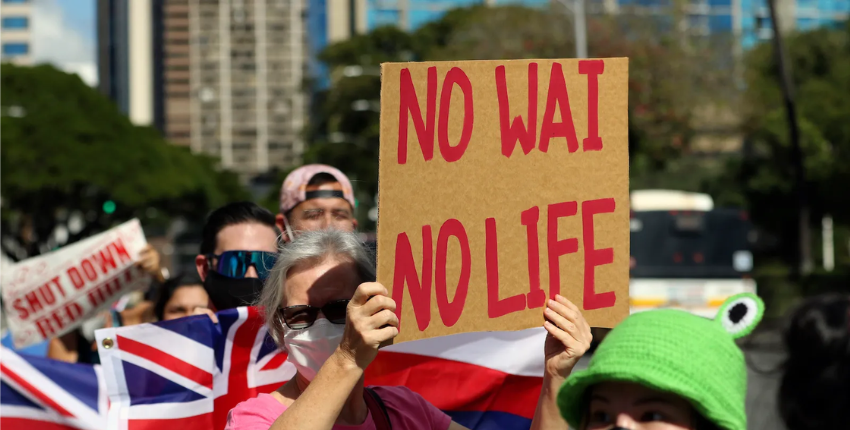
Hawai‘i is the most isolated island chain on Earth, ringed by ocean in every direction, and yet the islands are running short of the fresh water they actually need. That paradox sits at the center of one of the most urgent infrastructure conversations happening in the state today, and it’s why water reuse technology is quickly becoming a practical necessity for developers, utilities, and regulators alike.
A water-scarce state
Rainfall across the islands has been declining for decades, and the trend is accelerating. According to the State of Hawai‘i’s Climate Change Portal, 2025 ranked as the state’s second-driest year in more than a century, with statewide rainfall averaging just 42 inches, roughly 20 inches below the 30-year norm.
On O‘ahu, home to more than two-thirds of the state’s population, nine monitored aquifers spent much of last year in alert or caution status, with key sources like Kaimukī, Punalu‘u, and Pearl City recording sustained declines after rainfall fell to just 53% of normal over a five-month stretch, as reported by CBS News. The long-range outlook isn’t any better: by the end of the century, researchers project that rainfall could drop by up to 30% in already-wet regions and 60% in dry ones, according to Hawai‘i Business Magazine.
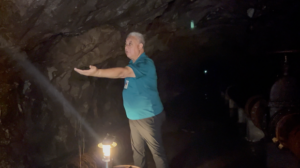
Honolulu Board of Water Supply Community Relations Specialist Arthur Aiu took CBS News 1,500 feet into a water shaft in one of Oahu’s mountains, where it takes a single raindrop 25 years to end up in the island’s sole freshwater source – the underground aquifer.
Groundwater is the backbone of the state’s freshwater supply, but it isn’t recharging as it used to. That’s a structural problem for an island economy that can’t simply pipe in water from a neighboring watershed when supply runs tight.
Infrastructure grading at a D+
Compounding the supply problem is the condition of the systems meant to deliver and treat that water. The American Society of Civil Engineers gave Hawai‘i’s infrastructure an overall D+ on its first-ever report card, with drinking water and wastewater systems each individually graded D+. Some of the mains and wells still in service today date back to the 1920s.
On O‘ahu specifically, the Honolulu Board of Water Supply manages more than 2,000 miles of pipeline and loses an average of 586 million gallons of water a year, about 1% of everything flowing through the system, to main breaks, according to Honolulu Civil Beat. Replacing just 1% of the pipe network annually would cost an estimated $160 million a year, and the utility has identified more than $5 billion in total infrastructure needs in its own 30-Year Infrastructure Investment Plan. Every gallon lost to an 80-year-old broken main is a gallon pulled from an already-shrinking aquifer.
Wastewater’s bigger, dirtier problem
Hawai‘i’s wastewater system carries its own crisis. The state still relies on an estimated 88,000 cesspools–nearly 11,000 of them on O‘ahu alone–that discharge untreated sewage directly into the ground, per the Hawai‘i Department of Health and the EPA. Collectively, these systems release roughly 53 million gallons of raw sewage into Hawai‘i’s soil and groundwater every single day, carrying pathogens linked to Hepatitis A, leptospirosis, and salmonellosis.
That pollution is a direct contributor to the chronic coastal contamination documented in the state’s most recent water quality report, which found that some O‘ahu beach sites exceeded safe bacteria thresholds in 100% of samples taken over the past year, as reported by Hawaii News Now. The legislature passed Act 125 in 2017, mandating a phaseout of all cesspools by 2050, but the scale of the required conversion still dwarfs the state’s current pace and funding.
Cesspools can contaminate groundwater, and large-capacity cesspools (LCCs) have been banned since 2005.
More people, more pressure
None of this is happening against a backdrop of shrinking demand. O‘ahu’s daily water use jumps from roughly 130 million gallons to 150 million gallons every summer, driven by both year-round residents and the visitors who move through the island continuously, according to Honolulu Civil Beat’s water use data dive.
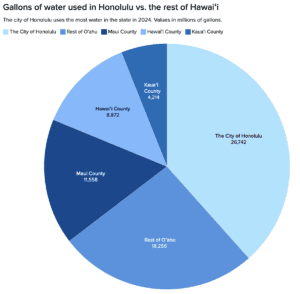
Chart: Caitlin Thompson | Source: State of Hawaiʻi Data Book 2024
Tourists use water at roughly the same per-capita rate as residents, and University of Hawai‘i research found visitor arrivals to the island grew 50% in the decade before the pandemic. A finite, shrinking freshwater supply is being asked to stretch across a resident population, a visitor population that can rival a mid-sized city on any given day, and an aging network that hemorrhages supply before it ever reaches a tap.
When the system fails, it fails big
In November 2021, a leak at the Navy’s underground fuel storage facility contaminated the drinking water system serving more than 90,000 people at Joint Base Pearl Harbor-Hickam, sending thousands to seek medical care for vomiting, rashes, and neurological symptoms, according to the Red Hill water crisis record of events. It was a singular event, but it underscored a broader truth: in a closed-island water system, there is very little margin for error and very few backup sources to lean on when one part of the system fails. The Red Hill crisis put a human face on what happens when Hawai‘i’s water infrastructure breaks down.
Why reuse technology changes the equation
Every one of these pressures, shrinking groundwater, deteriorating pipes, tens of thousands of untreated cesspools, and rising demand from residents and visitors alike, points toward the same structural fix: using less freshwater. Onsite water reuse systems capture greywater from showers, bathroom sinks, and laundry, and treat it for non-potable uses like toilet flushing, irrigation, washing machines, and cooling towers. The same gallon of water gets used over and over again. For new residential and commercial construction in Hawai‘i, that means less draw on a strained municipal supply, less new load on wastewater infrastructure that’s already failing, and meaningfully lower long-term operating costs for building owners.
It’s no longer theoretical, either. Hawai‘i recently became home to two of the first onsite greywater reuse systems ever permitted inside a residential high-rise in the state, a joint effort between developer Kobayashi Group, water technology provider Epic Cleantec, and local contractor Commercial Plumbing. The projects, Kuilei Place and Ālia in Honolulu, carved the path for regulatory approval with the Hawai‘i Department of Health, the Honolulu Board of Water Supply, and the City and County of Honolulu. Getting there wasn’t simple, but the approval didn’t just clear two buildings. It created a template that future Hawai‘i developments can now follow.
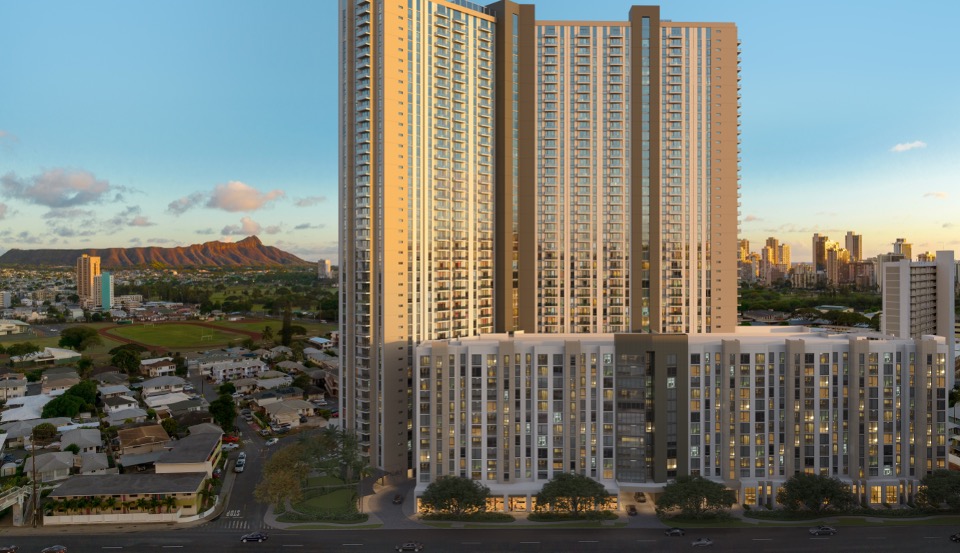
A blueprint worth reading
How did a developer, a water technology partner, and a contractor get two first-of-their-kind onsite water reuse systems through Hawai‘i’s approval process in under 15 months, with no existing regulatory pathway to follow?
The full story, including which agencies were involved, the concerns regulators raised, and the lessons learned along the way, is documented in Epic Cleantec’s case study on the project.
Download the case study to see how Hawaiʻi’s first permitted onsite greywater reuse systems became a reality.