The Super Bowl uses more water than you think


The Super Bowl is one of the most-watched events on the planet. Millions of fans, thousands of staff, a perfectly maintained field, endless food and drinks, and behind it all, an enormous amount of water.
While most people think about water use during the Super Bowl in terms of restroom lines or halftime cleanup, the reality is much bigger. From the beer in your cup to the turf under players’ cleats, water is working overtime on game day.
Stadium Restrooms
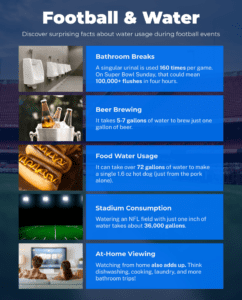
Large stadiums require an enormous number of restrooms to keep crowds moving. As a general rule, stadium designers install one urinal for every 80 male spectators, one toilet stall for every 225 men, and one toilet stall for every 60 women. A very necessary scale when tens of thousands of fans are in attendance.
The impact becomes clear on game day. During the 2018 Super Bowl in Minneapolis, fans generated an estimated 8,000 gallons of urine and nearly one million gallons of wastewater, more than the volume of water flowing over Niagara Falls every second.
A single urinal can be used around 160 times per game, and on Super Bowl Sunday, that can mean 100,000 or more flushes in just a few hours. While each flush uses only a small amount of water, multiplied across thousands of fixtures and fans, restroom use quickly becomes one of the largest sources of potable water demand at major sporting events.

Beer & Food Production
The Super Bowl isn’t complete without food and drinks but producing them is surprisingly water-intensive. So, how much water does it take to produce the popular food and drinks we consume on Super Bowl Sunday?
Beer is a strong example. With beer being the undisputed drink of choice at every Super Bowl game, it’s estimated that Americans drink over 325M gallons of beer on game day alone. It takes an estimated 5–7 gallons of water to produce 1 gallon of beer, including brewing, cleaning, and agricultural inputs.
Food adds even more to the total. A single hot dog can require well over 70 gallons of water to produce, largely due to the water footprint of livestock production and meat processing. Chicken wings, another fan favorite, tell a similar story. Just last year, Americans consumed around 1.4 billion chicken wings, and producing just one chicken requires about 2,330 gallons of water.
Then there’s guacamole. The avocado industry is gearing up for one of its strongest seasons. According to Avocados From Mexico, 280 million pounds of avocados are destined for the Super Bowl day alone. Avocados are a particularly water-intensive crop, requiring an average of about 528 gallons of water to produce roughly 2.2 pounds.
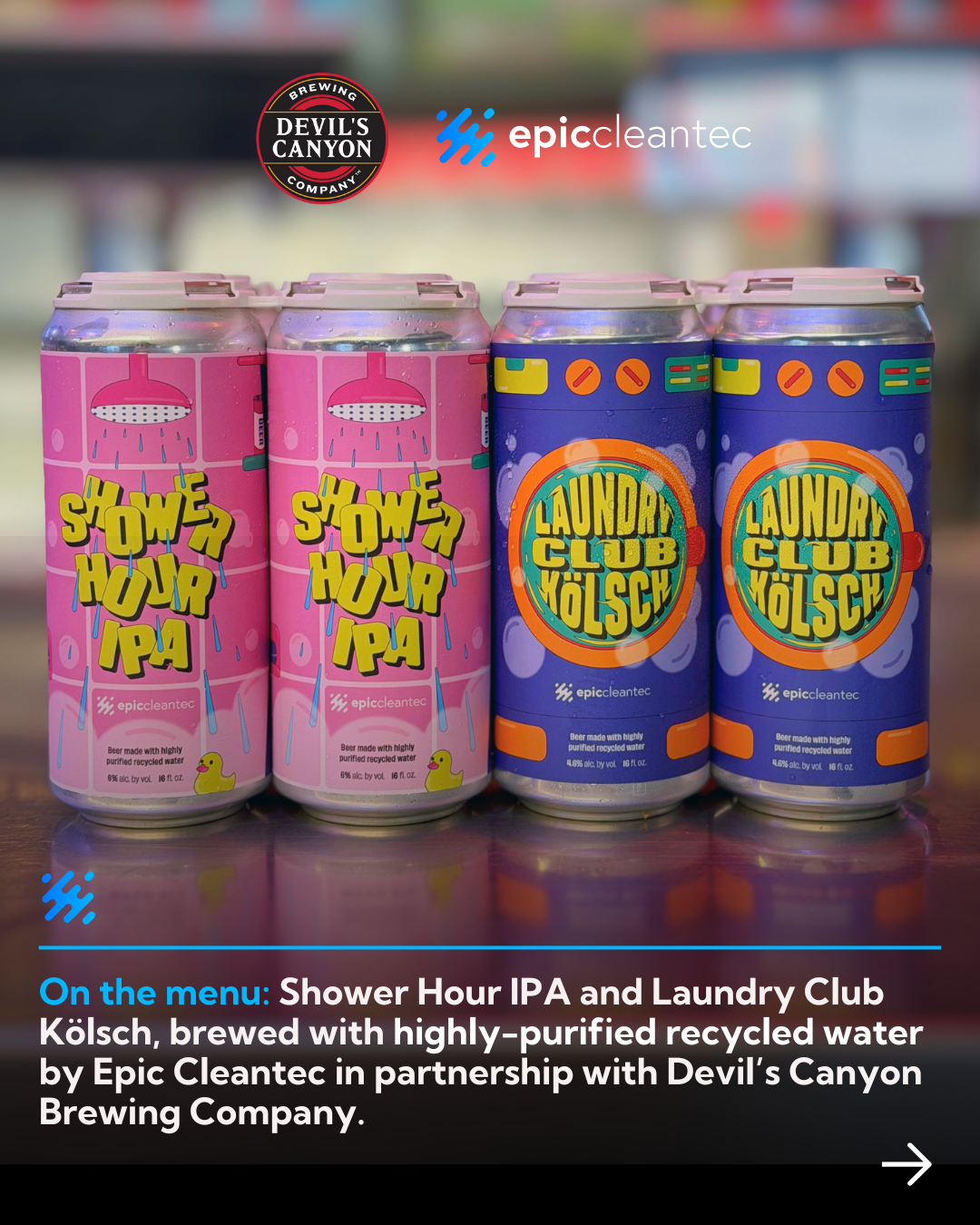
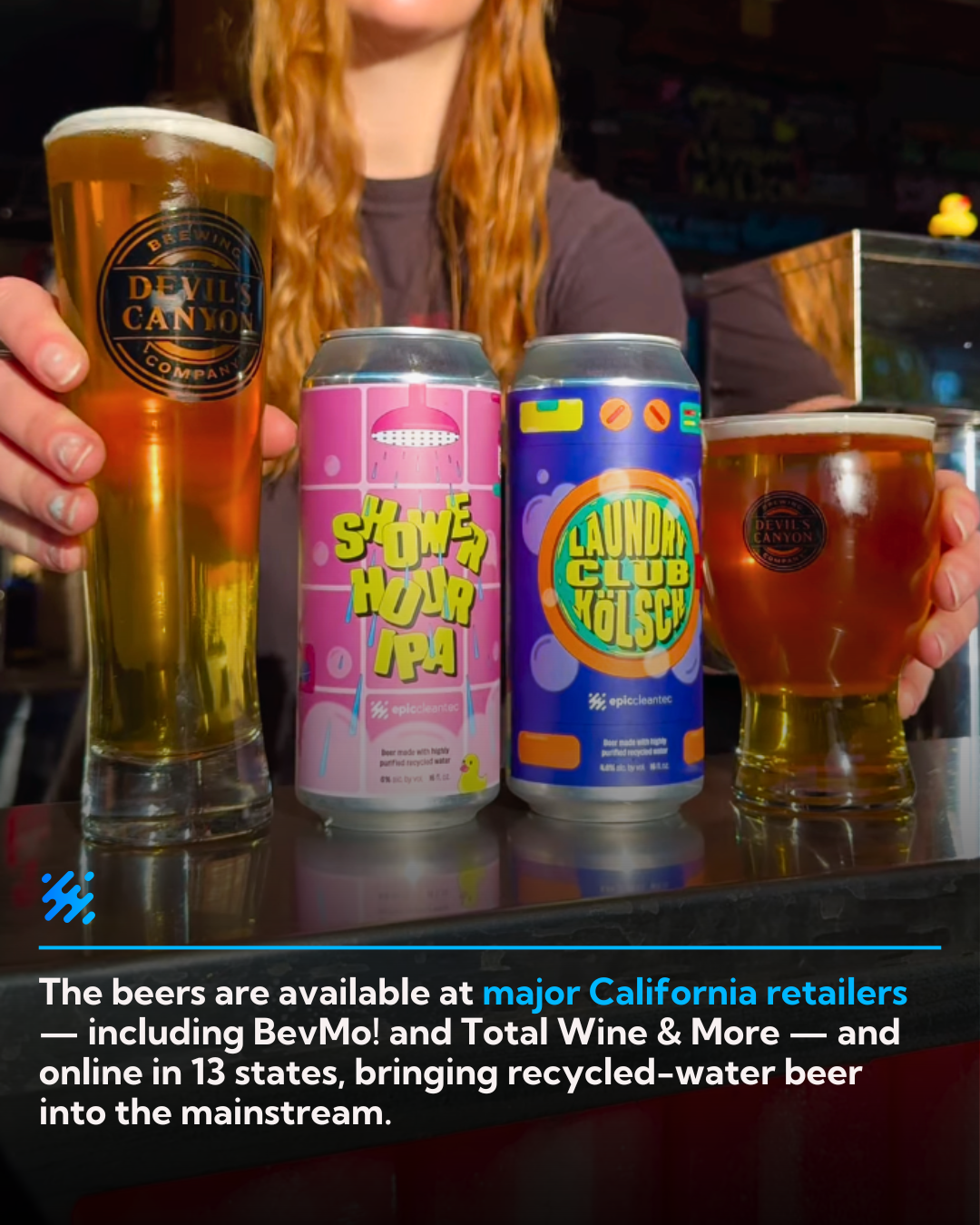
The good news is that reuse systems at breweries, food facilities, and processing plants offer a proven way to dramatically reduce water demand. And this isn’t a future concept; it’s already happening. At Epic Cleantec, we are proving what’s possible when it comes to water reuse. This year, our beer brewed using recycled water produced in partnership with Devil’s Canyon Brewing Company, was selected to be served at official Super Bowl music events in San Francisco.

Stadium Operations
Keeping an NFL field in perfect condition takes more than skill; it takes a whole lot of water.
Watering a professional NFL football field, with just 1 inch of water requires approximately 36,000 gallons, and additional turf along the sidelines increases total water use.
And after the final whistle, the real cleanup begins. From pressure washing concourses to cleaning restrooms, suites, kitchens, and seating areas, post-game cleaning can use tens of thousands of gallons of water. Add in pre-event preparation and routine maintenance, and water demand extends far beyond the four quarters.
Imagine If All That Water Could Be Reused

Now imagine if the water used for flushing, field irrigation, cooling, and cleaning didn’t have to be used just once. This is where water reuse changes the game, without sacrificing performance, safety, or fan experience.
Several major sports venues are already proving that large-scale water reuse works:
- Levi’s Stadium (Santa Clara, CA): Uses recycled water for field irrigation, toilet flushing, cooling and refrigeration systems, and green roof irrigation.
-
- Read our blog featuring an interview with facilities leaders from Levi’s Stadium on how they reduce water usage throughout their propery.
- Gillette Stadium (Foxborough, MA): Gillette features an onsite wastewater treatment and reuse system that treats and stores wastewater for use in toilet flushing, cooling, and irrigation. 
- SoFi Stadium (Inglewood, CA): Designed with reclaimed water infrastructure to support irrigation and cooling systems.
- Dignity Health Sports Park (Carson, CA): Utilizes recycled water for landscaping and irrigation.
- Target Field (Minneapolis, MN): Implements a rainwater capture and reuse system, reducing municipal water usage by over 50%.
The Super Bowl will always include big crowds, big moments, and big water use. But it doesn’t have to mean big waste. Stadiums like Levi’s demonstrate how major sports venues can significantly reduce water use while maintaining performance, comfort, and fan experience.
Want to learn more about how onsite water reuse systems can transform your project? Read more here.