Levi’s Stadium: A water reuse leader

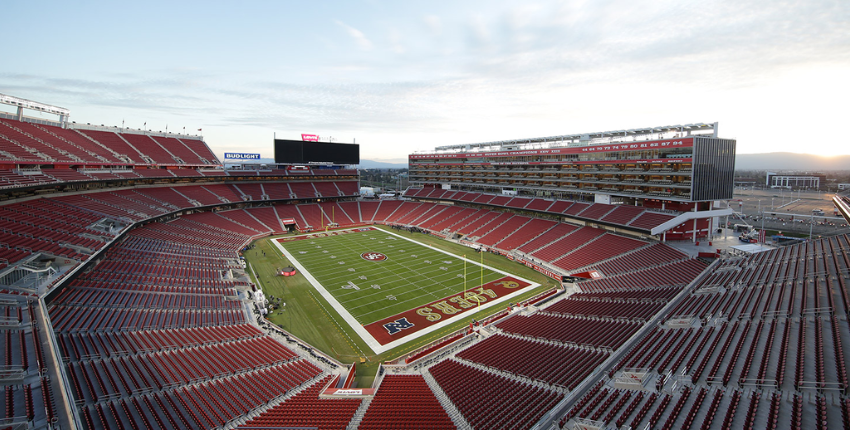
Levi’s Stadium is hosting Super Bowl LX, placing one of the world’s most-watched sporting events in the heart of Santa Clara, California. As the first LEED Gold–certified NFL stadium, Levi’s Stadium stands out as a leader in sustainable water management, reducing potable water use through conservation, recycling, and smart landscaping.
The stadium first opened in July 2014 as the new home for the San Francisco 49ers, replacing Candlestick Park, and is known for its modern design, technology, and sustainability.
Inside Levi’s Stadium’s Water Strategy
Large sporting events are water-intensive operations. From irrigating natural grass fields and maintaining restrooms to food service, cooling systems, and post-event cleanup, a single game can require hundreds of thousands of gallons of water. Hosting an event on the scale of the Super Bowl amplifies those demands even further, putting added pressure on local water supplies if conservation and reuse strategies aren’t in place.
As we explored in our recent blog on water use at the Super Bowl, smart water planning can significantly reduce the environmental footprint of game day, without sacrificing performance, safety, or the fan experience.
Levi’s Stadium offers a real-world example of how thoughtful design and long-term planning can make even the biggest games more water efficient.
How does Levi’s Stadium conserve water?
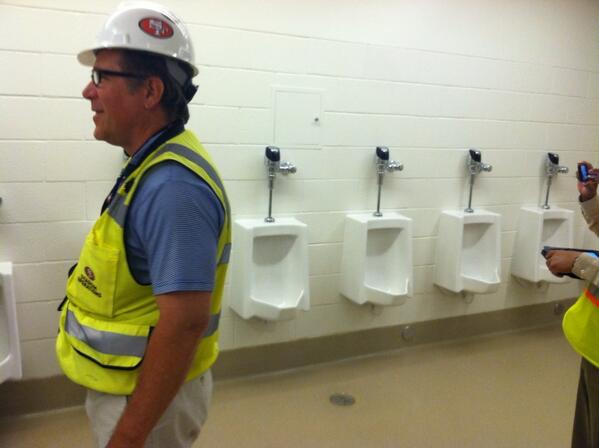
Levi’s Stadium uses low-flow toilets, urinals, and sinks that consume 40% less water than traditional fixtures. The stadium has also upgraded its cleaning operations. Older hose systems once used up to 16,000 gallons of water per hour to clean seating areas. These have been replaced with pressure-washing systems that use approximately 3,000 gallons per hour, cutting water use by more than 75%.
How much recycled water does Levi’s Stadium use?
Approximately 85% of the water used at Levi’s Stadium is recycled water supplied by the Santa Clara Valley Water District. At the stadium, it is used for field irrigation, toilet flushing, cooling and refrigeration systems, and irrigation of the stadium’s green roof, significantly reducing demand for drinking-quality water.
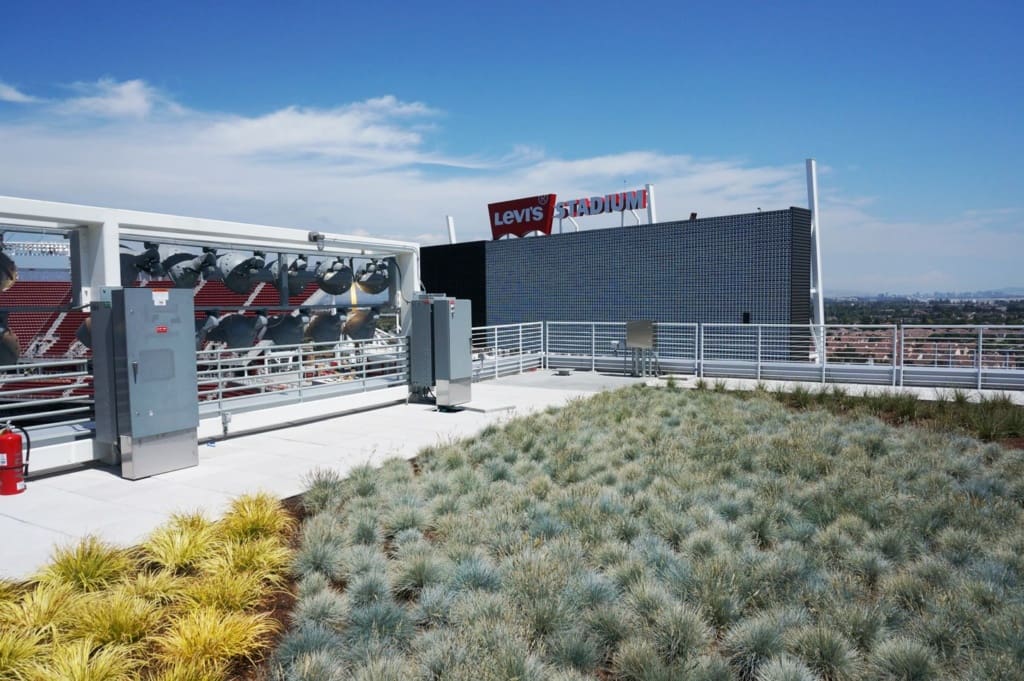
The facility includes a biofiltration system, a large green roof, an on-site vegetable farm, solar power generators, and more.
Roger Elu, Chief Engineer and Cameron Lacson, Stadium Director of Facilities for Levi’s Stadium, describe how the stadium’s water reuse efforts were designed not only to support the demands of the Super Bowl, but long-term operations beyond the event:
Q: Can you share a bit about how Levi’s Stadium approaches water recycling and reuse on a year-round basis?
A: “Dating back to the early concepts and designs of Levi’s Stadium, the York family prioritized building this venue with sustainability in mind. Having a real grass playing surface requires a lot of water usage, which is why we focused on how to conserve our water usage. When the stadium opened in 2014, we became the first professional sports venue in the country with a dual-plumbing system, meaning both potable and recycled water is pumped into the facility. Over the lifetime of Levi’s Stadium, we’ve used about 120 million gallons of recycled water for irrigation, restrooms, and more — that’s enough to fill the entire stadium with water, and then some.” – Roger Elu, Levi’s Stadium Chief Engineer.
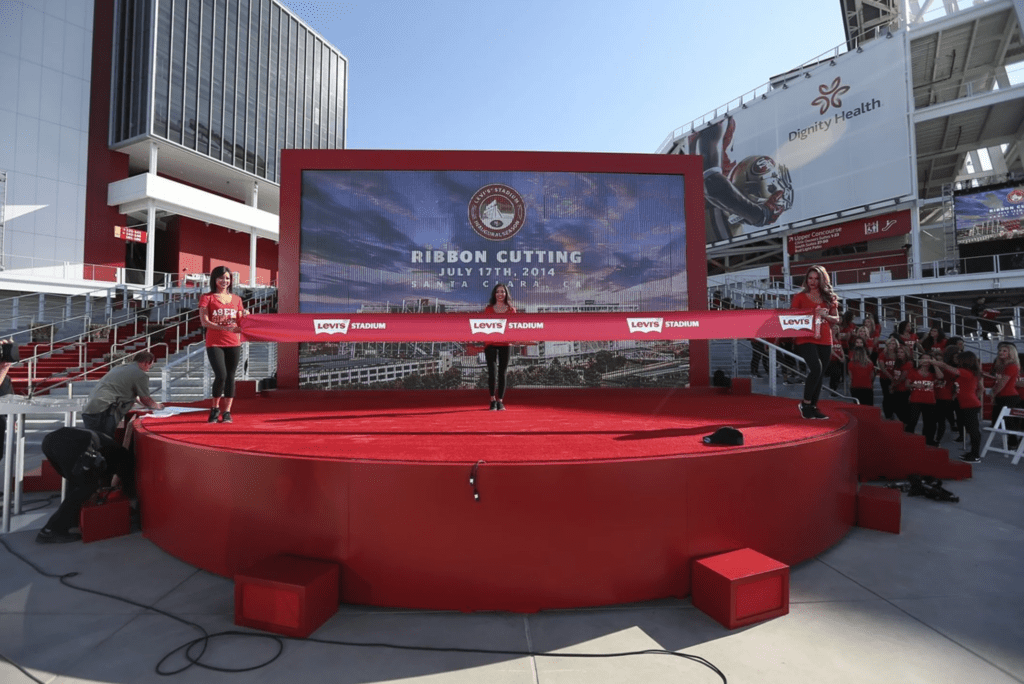
Levi’s Stadium Ribbon Cutting 2014
Q: Are you preparing for any changes in water usage specifically for the upcoming Super Bowl event?
A: “Over the past 12 years, we’ve been fortunate to host some of the world’s biggest events, such as Super Bowl 50, a College Football Playoff National Championship Game, numerous global soccer matches, and Taylor Swift. When it comes to water usage, we are preparing for Super Bowl LX like we would prepare for any other world-class event.” – Roger Elu, Levi’s Stadium Chief Engineer.
Q: Will there be any additional conservation tactics in place during the Super Bowl?
A: “For Super Bowl LX, the 49ers are partnering with the NFL and PepsiCo to feature reusable cups in concessions. These cups will be available to 4,000+ seats for use and return, before they are collected and sanitized for reuse. This follows a pilot program held at Levi’s Stadium all season, in which 32,400 cups were reused.” – Cameron Lacson, Levi’s Stadium Director of Facilities.
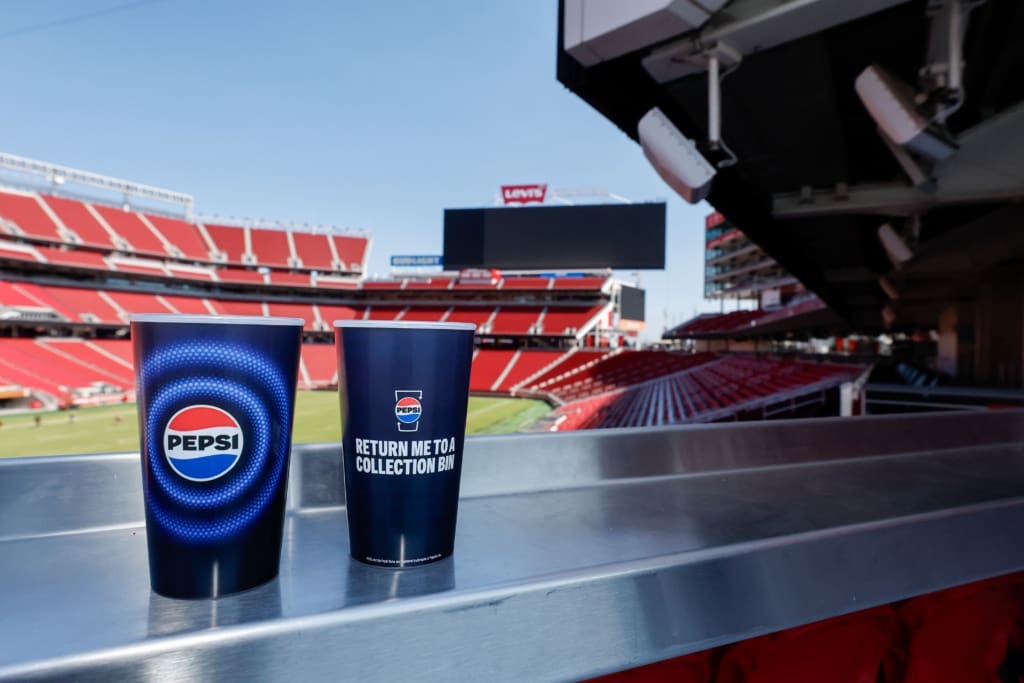
The San Francisco 49ers implemented reusable cups with long-time partner PepsiCo at Levi’s® Stadium
Levi’s Stadium proves that hosting one of the world’s biggest sporting events doesn’t have to come with massive water waste. From restrooms and concessions to field maintenance and cleanup, water is embedded into nearly every part of the game-day experience.
Want to learn more about how onsite water reuse systems can transform your project? Read more here.